Property use
Insurance for Oklahoma rentals, short-term rentals and second homes
A weekend cabin, tenant-occupied house and furnished rental present different insurance questions. Use your occupancy calendar to compare coverage for the building, belongings, rental income and the people who stay there.
Request a quote for your Oklahoma home
The short answer
An Oklahoma second home or rental may need coverage tailored to its actual use. Standard homeowners insurance can leave gaps for paying guests, and an endorsement or another policy form may be appropriate. Describe family stays, lease arrangements and short-term bookings to the insurer, then confirm which uses the proposed policy permits.
- Disclose who occupies the home, how often and under what agreement, including family arrangements, reduced rent and changes between uses.
- Compare a booking platform’s protection with your own policy, including qualifying stays, direct bookings, exclusions and days between guests.
- Check what triggers rental income coverage and how payments are calculated. Ordinary cancellations and tenant turnover may fall outside its terms.
On this page
How occupancy decides which policy fits
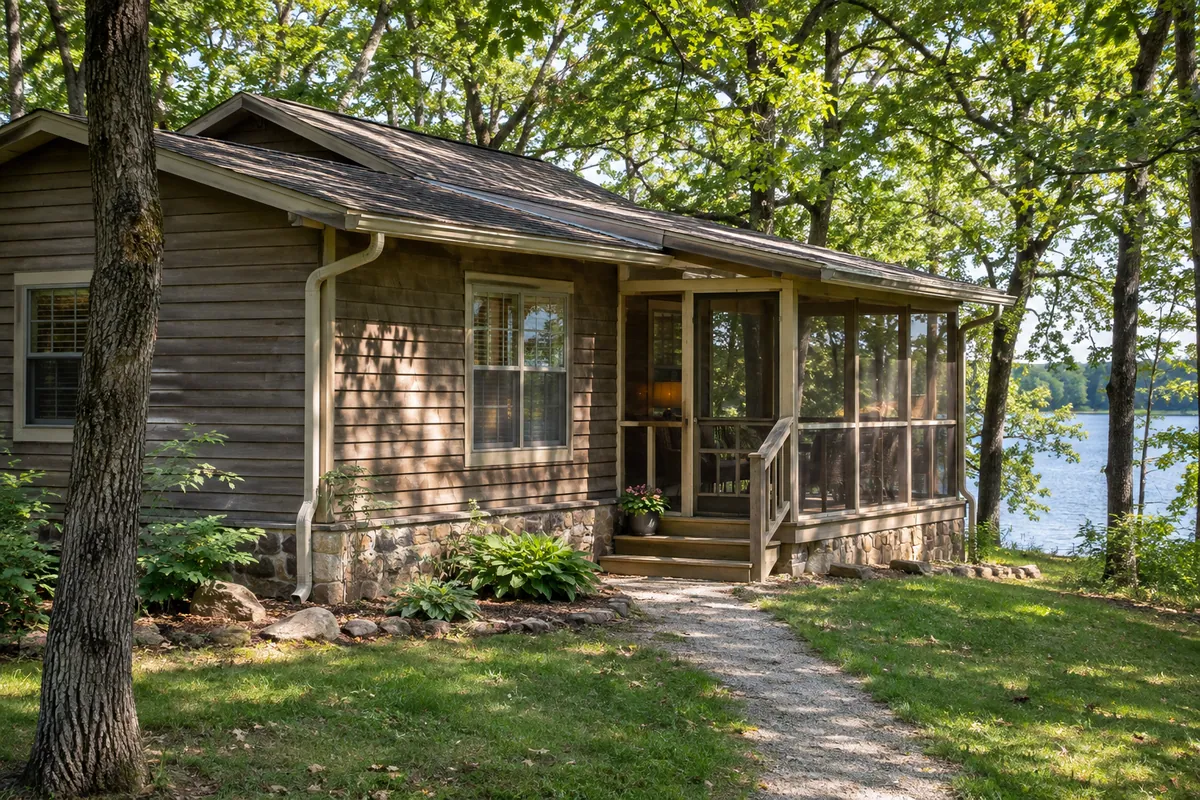
A house near Grand Lake could be a family retreat, a year-round rental or both. The insurer needs an accurate occupancy calendar because each use changes who can discover a leak, who can be injured on the premises and whose income depends on an uninterrupted stay.
Write down the months you intend to visit, whether you keep the home available when you are away and the longest expected gap between visits. Identify who receives payment for stays and whether anyone has a right to occupy the property without you. If the house has a separate garage apartment, describe its use independently. A primary residence with a tenant over the garage presents a different set of questions from two structures that are both available to guests.
Use ordinary language in the first conversation. “My daughter lives there through May, then I plan to rent the whole house by the week” is more informative than “investment property.” If these are plans and you have no booking history, say so. If the use recently changed, give the prior arrangement and the date of the change. A written account makes it easier to catch a quote issued on the assumption that you still live there.
Second home and seasonal cabin insurance
A second home can be furnished, maintained and regularly visited while the owner's primary residence is elsewhere. Start by asking whether the carrier will insure the Oklahoma address as a secondary or seasonal residence and what those terms mean in its policy. Obtain separate answers for the building, the furniture kept there and your liability at that location. A declarations page showing a primary home address tells you little about the amount available to rebuild another house.
At a seasonal place, the cost of replacing what stays behind can surprise the family. Walk from the kitchen to the porch and photograph the appliances, spare bedding, outdoor furniture and equipment. Note which items belong to an adult child or other relative. Ask where the insurer draws the line between personal property and the building for installed items. If you keep high-value fishing gear or a boat at the house, identify it separately so you can review applicable limits and any need for a different policy.
Plan for the longest absence, especially when one missed visit could become several. Tell the producer what happens to the heat and water, who has authorized access and how you hear about a power failure. If a company asks for inspections at specified intervals, ask what counts as an inspection and keep evidence that fits its instructions. A neighbor seeing the lights from the road is helpful. It may say nothing about a failed supply line underneath the kitchen sink.
Landlord insurance when you rent the house to a tenant
Before you give the keys to a tenant, ask for a quote that describes the house as rented to others. A property manager can provide the lease dates, monthly rent, number of units and details of what you furnish. You may need a different form or policy from the one that insured your family while you lived there. Obtain the effective date and written confirmation of the new arrangement before making changes to your existing coverage.
Follow the money and ownership through the building. You may own the refrigerator, range, blinds and lawn equipment while the tenant owns nearly everything else inside. Identify each item to the producer and ask which limit applies. A dwelling quote can look generous on the building while allocating very little to the owner's movable property. Tenant possessions generally belong on the tenant's renters policy. Asking for proof of that policy does not address your need to insure the building or protect yourself against liability.
If you own a duplex, outline each side independently. Which side do you occupy? Is either tenant responsible for maintaining shared stairs or a yard? Who owns the shed both households use? Ask whether premises liability applies to the whole location and identify any separate rental address or suite number. A quote for the right street can still describe the wrong occupancy or leave a building off the schedule. Resolve that discrepancy before signing the application.
Short-term rental insurance for Airbnb and Vrbo hosts
The Oklahoma Insurance Department warns that a homeowners policy can leave gaps for damage or injuries involving paying guests. A hosting arrangement may need an endorsement specifically allowing that activity, a different residential form or a commercial policy. The right question is whether the insurer accepts the way you host. A landlord policy written around a twelve-month lease may have its own limits on short stays, even if its name sounds appropriate.
Describe whether you share the kitchen with guests or hand over the entire property. Give the minimum stay you accept, the maximum number of overnight guests and whether guests can organize gatherings. Explain which platforms you use and whether repeat visitors can pay you directly. If a manager handles listings, ask for a copy of the public advertisement. A listing that promotes a separate sleeping loft, dock or hot tub gives an underwriter a better picture than a shorthand count of rooms.
Before opening the calendar, give the producer a simple hypothetical. A paying guest rents directly, falls on the steps and says the handrail was loose. Ask which policy would receive the report, which provision addresses rental activity and whether the proposed coverage includes the defense of a covered claim. Then change the scenario to a family weekend with no paying guests. The objective is to identify any interval or activity for which nobody can point to a provision that applies.
What a booking platform’s host protection covers
Hosting platforms may offer protection subject to their own terms. Download the terms that apply to you and the listing. Separate any promise to reimburse a host for certain property damage from liability insurance for a claim made against the host. Write down who can make a request, how to notify the service, what evidence is needed and which stays qualify. Terms can change, so retain the copy applicable to the booking if you later need to make a report.
Work through an ordinary weekend. A guest checks out, the cleaner discovers a cracked cooktop and your next booking starts that afternoon. Which photographs establish the prior condition? Can the manager report on your behalf? Does the program distinguish accidental breakage from damage that accumulated over many stays? The answers affect whether you can pursue a request and what you need to retain after replacing the cooktop. They are different questions from whether your own property insurer will cover the loss.
Consider days when there is no platform booking at all. A delivery arrives, a contractor visits, a friend borrows the cabin or someone books directly. Write those uses on the same calendar. Check whether the owner's insurance follows the location and disclosed activities through those days. If the answer relies solely on an active platform reservation, go back to the producer for a proposal covering the other periods.
Building, furnishings and amenities: what to list
Start at the driveway. List the main house, detached garage, guesthouse, fence and any dock, lift or storage building. For each, record who owns it, how it is used and whether it is available to the tenant or guest. Shared ownership or a separate parcel can complicate an answer. If a dock is licensed, leased or controlled by someone else, supply the agreement and ask which property you must insure and what liability you accepted.
Go room by room inside a furnished rental. Photographs are useful, but add enough information to identify materials and replacement quality. A photo of a living room may show a sofa without establishing whether it is an ordinary purchase, custom furniture or the manager's rented staging piece. Ask how the policy settles a covered contents loss, what deductible applies and whether there are limits on property held for rental. A replacement estimate only makes sense if the item qualifies under the wording.
Then describe activities separately from structures. Coverage for a building beside the water says little about providing kayaks to paying guests. A hot tub can be undamaged while a guest asserts an injury claim. Inform the producer about equipment, waterfront access, play structures and any animals on the premises. Request the wording for restrictions that matter, including any conditions the owner must continue to meet. If you discontinue an activity, update both the property and the listing so the description remains accurate.
Loss of rental income coverage
For a leased house, begin with the lease and the rent ledger. For a home booked by the night, start with confirmed bookings, cancellations, fees and actual revenue from comparable periods. A weekend selling out in July may say little about expected revenue in January. Separate rental income from security deposits, cleaning charges and taxes collected from guests. Ask which amounts the proposed loss-of-rents, fair-rental-value or business-income provision would consider and which expenses the calculation would subtract.
Suppose a covered kitchen fire makes a leased house uninhabitable for three months. The first insurance question is whether the event and building qualify. Next come the period of repair and any waiting period, dollar limit or time limit. The owner might have invoices for temporary fencing and alternate accommodation for a visiting relative. Neither is automatically part of the rent calculation. Place each expense or income item under the provision the producer believes could apply.
Contrast that with a tenant simply moving out, an off-season calendar with no bookings, or a reservation canceled because a guest becomes ill. A promise to cover lost rents following covered property damage has a specific trigger. Ask what would happen if guests cannot reach the house but the house itself remains usable. Obtain the terms for access restrictions or civil authority if offered. This approach turns a reassuring heading on a quote into a concrete understanding of the losses your household would still fund.
Wind, hail and water claims at a rental property
Imagine hail damages the roof the day after a tenant moves in. Start with the dwelling deductible and then check for a separate wind or hail deductible. If it is a percentage, identify the dollar base shown in the wording before doing the math. Ask whether the roof is paid at replacement cost, a depreciated amount or a scheduled amount. Check for a cosmetic damage limitation, and ask whether it applies to the roof covering you actually have.
Next imagine the carpeting is wet when your cleaner arrives. A broken supply line, water entering through a storm-created opening, drain backup and surface flooding can lead to different answers. Ask for the relevant exclusions and any endorsements. Oklahoma's insurance department explains that ordinary homeowners insurance excludes flood damage. If flood is a concern for the location, discuss separate coverage for the building and its contents. Confirm any income protection independently.
Write a short plan for reporting damage while you are elsewhere. Who can safely photograph the rooms, keep the guest from returning to an unsafe area and authorize reasonable emergency work? Where are the insurer's claim instructions, and who will keep receipts? A manager may need permission to speak with an insurer. Arrange access ahead of time so nobody has to search your personal email during a power outage or guess whether they are authorized to act.
Vacancy between tenants and changes of use
Two tenants may sign consecutive leases and still leave a gap while you repair floors. Or a family member may leave in March and the first paying guest may not arrive until June. Tell the producer the expected length of the gap, what furnishings remain, whether heat and water are on and the work taking place. Vacancy and unoccupancy provisions depend on the wording and can restrict particular kinds of loss. A lease listing on its own does not resolve these questions.
Use dates when asking for a change. For example, if the lease ends September 30, the kitchen will be removed in October and the first short stay is expected in December, request an answer for all three periods. Ask again if construction expands or guest bookings are delayed. Some owners have an excellent proposal for the finished rental but no clear plan for the weeks when trades are there and nobody sleeps in the house.
At the other end of a tenancy, document when keys return and when the condition inspection took place. Dated photographs and a repair invoice can help distinguish old damage from a recent occurrence. Avoid promising tenants that an insurer will reimburse a deposit deduction or cover damage they discover. Refer a possible loss to the appropriate carrier with a factual account and let it evaluate the terms. Lease disputes and insurance claims can involve different duties and different evidence.
Furnished midterm rentals for traveling workers
A traveling worker who signs for eight weeks can fall between the uses that owners commonly describe. The house has a single occupant for longer than a vacation, yet the owner may advertise it online with furnishings, linens and cleaning. Find out what the insurer means by a short stay, whether it measures the original booking or the actual occupancy, and whether your method of advertising matters. There is no reason to guess that a month on the calendar changes a policy exclusion.
Find out who actually signs. An employer might contract for a house and move different employees through it without changing the name on the agreement. If that is the arrangement, provide the company's description of turnover rather than telling the underwriter that one tenant will occupy the house for six months. Ask whether coverage changes when the house sits empty between assignments and whether the permitted use includes the arrangement you have described.
Keep the inventory you hand over with the lease. If the occupant brings equipment for work, ask who owns it and keep those items off the list of property you expect your building policy to replace. Give the manager a way to flag an extension, a new occupant or a change to the lease before the next certificate or renewal is requested.
Choosing coverage you can manage from a distance
Use the home insurance quote comparison guide alongside the complete proposal and its endorsements. Start by highlighting the named insured, occupancy description and property address. If a limited liability company holds title or a relative co-owns the home, show the ownership paperwork to the producer and ask how each interest is recognized. An individual on the platform account may not be the same party that owns the house or receives rent.
Compare what you must do after purchase. Can you supply the requested roof records? Will a manager attend the initial inspection? If an insurer requires a corrective repair, who will receive that notice and who can approve an expense? In an Oklahoma storm season, arranging a visit may take more than a single call. Obtain a written explanation of binding conditions and follow-up requirements, and keep a calendar that the person with spending authority can actually access.
When a standard insurer declines, record its stated reason. A short-term rental restriction calls for a different conversation than a roof condition requirement. Where standard coverage is unavailable, a producer can consider whether a surplus lines option is appropriate for the risk. Ask for the same occupancy, exclusions, settlement and deductible comparisons. Choose based on the parts of a real loss your household could absorb and the activities the policy allows. Keep the final policy, any signed applications and the approved use description together.
Common questions
Can I keep a family cabin policy if I rent one weekend a year?
Give the insurer the proposed dates and describe who pays and whether you will remain on site. Ask whether the policy permits that occasional rental, whether an endorsement is needed and what changes for guest liability. Get the answer before accepting the booking. A short rental can still introduce an activity outside the policy you bought.
What if I rent to a relative at a reduced rate?
Describe the arrangement just as you would for an unrelated occupant. Tell the producer who lives there, whether you use the house yourself, whether there is a lease and what the relative pays. The relationship alone does not establish which occupancy the insurer will accept or which policy should cover the relative's belongings.
Does a property manager's insurance cover my house?
Ask for the management contract and an explanation of the manager's insurance. A manager's protection for its own operations does not establish that the building or your liability as owner is insured. Identify who has authority to report a loss, receive a notice and order emergency work while you are away.
Should the tenant insure my appliances?
List the appliances you own and ask how your own policy classifies each. The lease may address responsibility for damage, but it does not change the property definitions in an insurance policy. The tenant should make separate arrangements for their own possessions and liability. Record which appliances were in place at move-in.
Can I use the purchase price as the building limit?
Ask for a reconstruction estimate based on the building, including its features and construction, and confirm whether detached structures need individual limits. The real estate price can include land value and the earning potential of a rental. Those figures do not tell you what it would cost to rebuild after a covered loss.
What should I show a lender when converting to rental use?
Ask the lender for its written insurance requirements and the correct mortgagee wording. Have the producer prepare evidence that accurately reflects the bound policy, including deductibles and dates. Review any separate loan or occupancy conditions with your lender. A lender's acceptance of the insurance evidence does not settle whether the policy covers each rental activity.
Sources and further reading
- Oklahoma Insurance Department, insurance risks of home-sharingHosting paying guests can create property and liability gaps in personal coverage.
- NAIC, insurance coverage for home-sharing rentalsRental exclusions, platform protection and need for owner-specific review.
- NAIC insurance considerations for a moveConversion to landlord use, tenant belongings and unoccupied properties.
- Oklahoma Insurance Department policy formsOklahoma examples of landlord and dwelling forms. Actual terms and endorsements control.
- Oklahoma Insurance Department flood FAQsStandard homeowners flood exclusion and separate building and contents coverage.